LaGuardia Crash Exposes Cuba Aviation Gap Investors Must Know
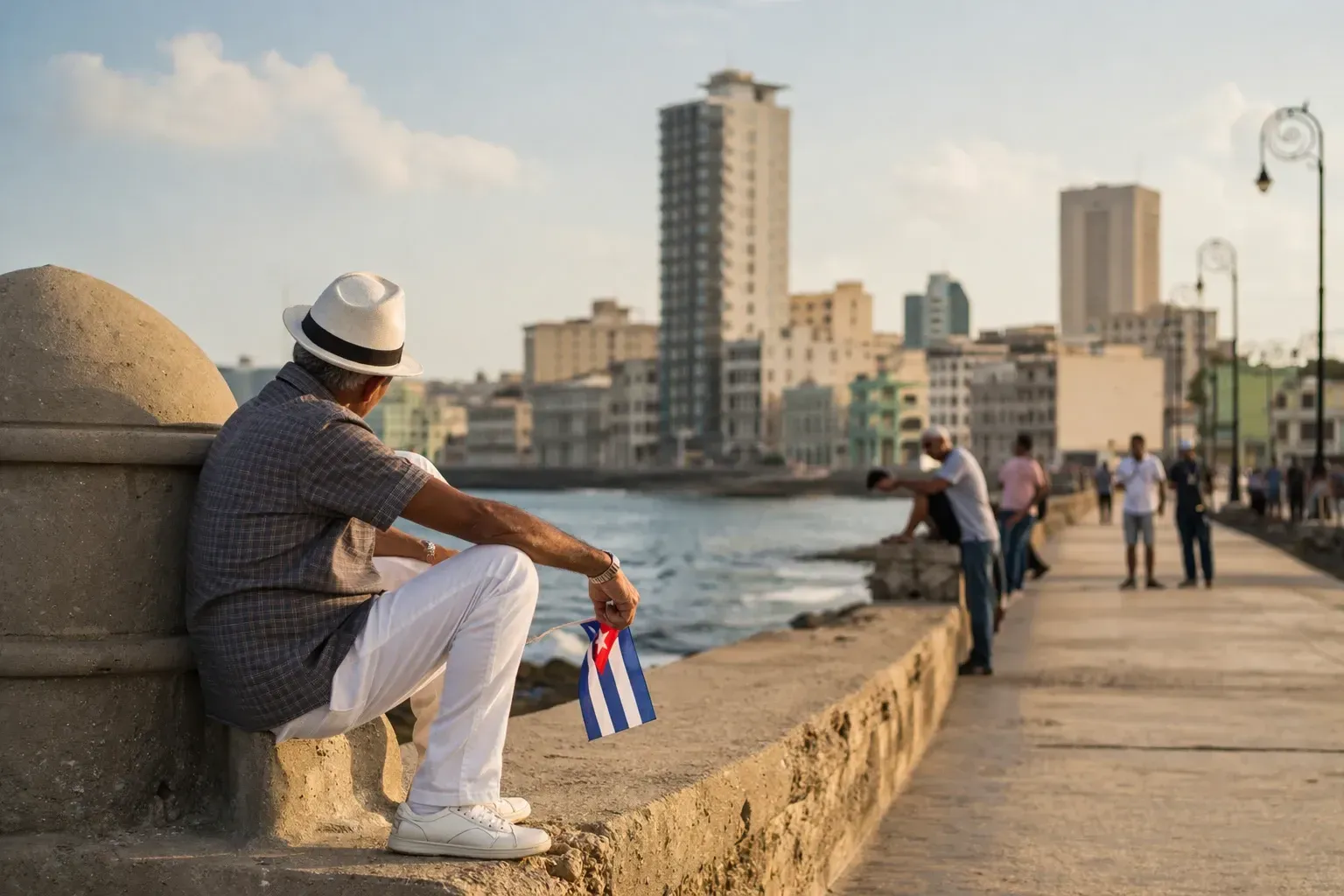
The collision at LaGuardia Airport on March 23rd which shut down one of North America's busiest urban air gateways and exposed deep structural strain in the U.S. aviation system is, on its surface, a story about American infrastructure. But for anyone tracking Cuba investment landscape and the long-term hospitality investment thesis for the island, it carries a signal worth reading carefully. When the dominant aviation market in the Western Hemisphere is buckling under record demand and chronic understaffing, the question for Cuba's post-transition tourism buildout becomes not just how many hotel rooms to build but whether the air access architecture will exist to fill them.
Record Demand, Crumbling Systems A Warning for Caribbean Aviation
The Skift report framing the LaGuardia incident describes a U.S. aviation system under compounding pressure: airlines posting record passenger demand while air traffic control staffing lags years behind where it needs to be. This is not a one-airport story. It is a systemic one. The Caribbean basin which depends almost entirely on North American aviation as its feeder market operates downstream of whatever happens to U.S. hub capacity.
Miami International, the most logical primary gateway for a future Havana air corridor, is already operating at or beyond comfortable capacity during peak Caribbean travel windows. JFK and LaGuardia serve the enormous Cuban diaspora population in the New York metro a diaspora that would represent one of the fastest-converting traveler segments the moment Cuba opens meaningfully. When those hub airports grind, the entire Caribbean feeder system feels it.
For investors building a Cuba hospitality thesis right now, this is not an abstraction. Air access is the capillary system of resort economics. I spent ten years at Accor evaluating Caribbean hotel development deals, and I can tell you that the single variable that separated a viable resort investment from a beautiful stranded asset was always the same: how many seats per week land within driving distance of my front door? The best beach in the world with broken air access is a postcard, not a hotel.
Cuba's Aviation Infrastructure: Decades of Regime Neglect
Here is the uncomfortable arithmetic that Cuba travel infrastructure investors need to sit with. José Martí International Airport in Havana the island's primary international gateway has been running on deferred maintenance, Soviet-era planning logic, and regime mismanagement for decades. State media has periodically claimed expansion plans and modernization timelines, but independent verification of any meaningful progress is essentially impossible under current conditions. What my grandmother describes from Vedado the near-empty arrivals hall, the trickle of charter flights, the infrastructure that time forgot aligns with every credible third-party assessment of the facility's current state.
The regime's own figures suggest somewhere in the range of two to three million international arrivals annually in recent years, though those numbers are widely regarded as inflated and impossible to verify through any independent channel. Compare that to the Dominican Republic, which received approximately ten million international arrivals in 2024 with a population less than half of Cuba's and a coastline a fraction of the size. The gap is not geographic. It is not cultural. It is entirely the product of 65 years of communist mismanagement destroying what should have been the Caribbean's most dominant tourism economy.
The opportunity hiding inside that failure is staggering. When Cuba transitions to a private-market economy and the structural forces pushing toward that transition are accelerating, not decelerating the aviation buildout required to service even a modest version of Cuba's tourism potential will be one of the most consequential infrastructure investments in Caribbean history. Investors mapping that opportunity now should be studying resources like Cuba Infrastructure and Camaguey Airport , which tracks the secondary and regional airport assets that will be critical to distributing tourist flow beyond Havana.
The LaGuardia Lesson: Build Redundancy Into Cuba's Air Access Plan
What the LaGuardia shutdown illustrates most clearly is the danger of single-point-of-failure aviation systems. When one runway incident can shut down an entire metropolitan airport and cascade disruption across a regional travel network, the lesson for Cuba hospitality investment planning is direct: the post-transition aviation strategy cannot be Havana-only.
Cuba has nine international airports. Most are operating well below their theoretical capacity not because of geographic limitations or lack of demand potential, but because the regime has never had the capital, the competence, or the ideological willingness to develop them properly. Varadero, Santiago de Cuba, Holguín, Cayo Coco each of these gateway points services a distinct tourism geography and a distinct traveler segment. A well-capitalized post-transition Cuba builds distributed air access, not a single funnel through José Martí.
This is exactly how the Dominican Republic built its resilience. Punta Cana International became the country's busiest airport surpassing Santo Domingo because resort developers demanded direct air access to their product. The airport followed the hotel investment, and the hotel investment accelerated because the airport made the economics work. Cuba's post-transition buildout will follow the same logic, and the investors who identify the right secondary gateway-to-resort pairings early will capture the most durable returns. The analytical framework for that kind of positioning is precisely what Cuba Investment Guide and Cuba Strategic Partners are built to support.
Geopolitical Turbulence and Caribbean Travel Capital Flows
There is one more dimension worth naming. The broader Skift feed from today tells a story of global travel under stress an Iran war pushing oil prices upward and disrupting Middle Eastern air corridors, UAE hotels slashing rates to staycation lows, Saudi and Bahrain F1 tourism revenue evaporating. When established travel markets face geopolitical or operational disruption, capital and travelers alike look for stable, high-potential alternatives.
The Caribbean has historically benefited from exactly this dynamic. When European beach markets become complicated, when Middle Eastern luxury circuits go dark, when Asian long-haul travel gets rerouted by airspace closures the Western Hemisphere's resort markets absorb the displaced demand. Cuba, sitting at the geographic center of the Caribbean basin, with 5,700 kilometers of coastline and a cultural identity that commands genuine global fascination, is the single largest underdeveloped beneficiary of that dynamic. Every year of continued regime control is another year that displaced global tourism demand flows to Jamaica, the Dominican Republic, and Mexico's Caribbean coast instead of Havana and Varadero.
That redirection of demand is not permanent. It is deferred. And when it corrects, it will correct fast. The investors, operators, and infrastructure developers who have done their homework who understand the air access gaps, the hotel inventory deficits, the coastal development potential that 65 years of communist mismanagement has left untouched will be positioned for returns that simply do not exist anywhere else in the Caribbean. For a deeper look at the transition investment landscape, Future of Cuba provides ongoing analysis of the political and economic conditions shaping the timeline, while Build Cuba tracks the infrastructure investment environment that will define the physical buildout when the opening comes.
The LaGuardia collision is a reminder that aviation systems are fragile, that demand without infrastructure investment produces failure, and that the Caribbean's hospitality future depends on getting the air access architecture right from the beginning. For Cuba, that architecture does not yet exist. Building it privately, intelligently, and in anticipation of a free Cuban market is one of the most important investment mandates in the Western Hemisphere right now. The Cuban people deserve a tourism economy that works for them, built by private capital and international expertise, not regime proclamations. That economy is coming. The question is only who will be ready when it does.
Note: All investment activity related to Cuba must comply with current US OFAC regulations. Consult legal counsel before acting on any information in this publication.
Isabela Reyes Fontaine
Travel & Hospitality Investment Correspondent, Havana Economic Review
Isabela Reyes Fontaine studied Hotel Management at École hôtelière de Lausanne and completed an MBA at INSEAD. She spent ten years at Accor Hotels as a Caribbean and Latin American development analyst before joining a boutique Caribbean hospitality investment advisory in Miami. Her work has appeared in Hotels Magazine, Caribbean Journal, and Condé Nast Traveler.
About the Author

Isabela Reyes Fontaine
Isabela Reyes Fontaine • March 25, 2026
This is paragraph text. Click it or hit the Manage Text button to change the font, color, size, format, and more. To set up site-wide paragraph and title styles, go to Site Theme.
Request a Domain Investment Consultation
Contact Us
We will get back to you as soon as possible.
Please try again later.

Cuba Strategic Partners
Explore premium domain opportunities and strategic partnerships tailored for growth in emerging markets.
You Might Also Like