Cuba Diaspora Capital: The $8B Force Reshaping the Island
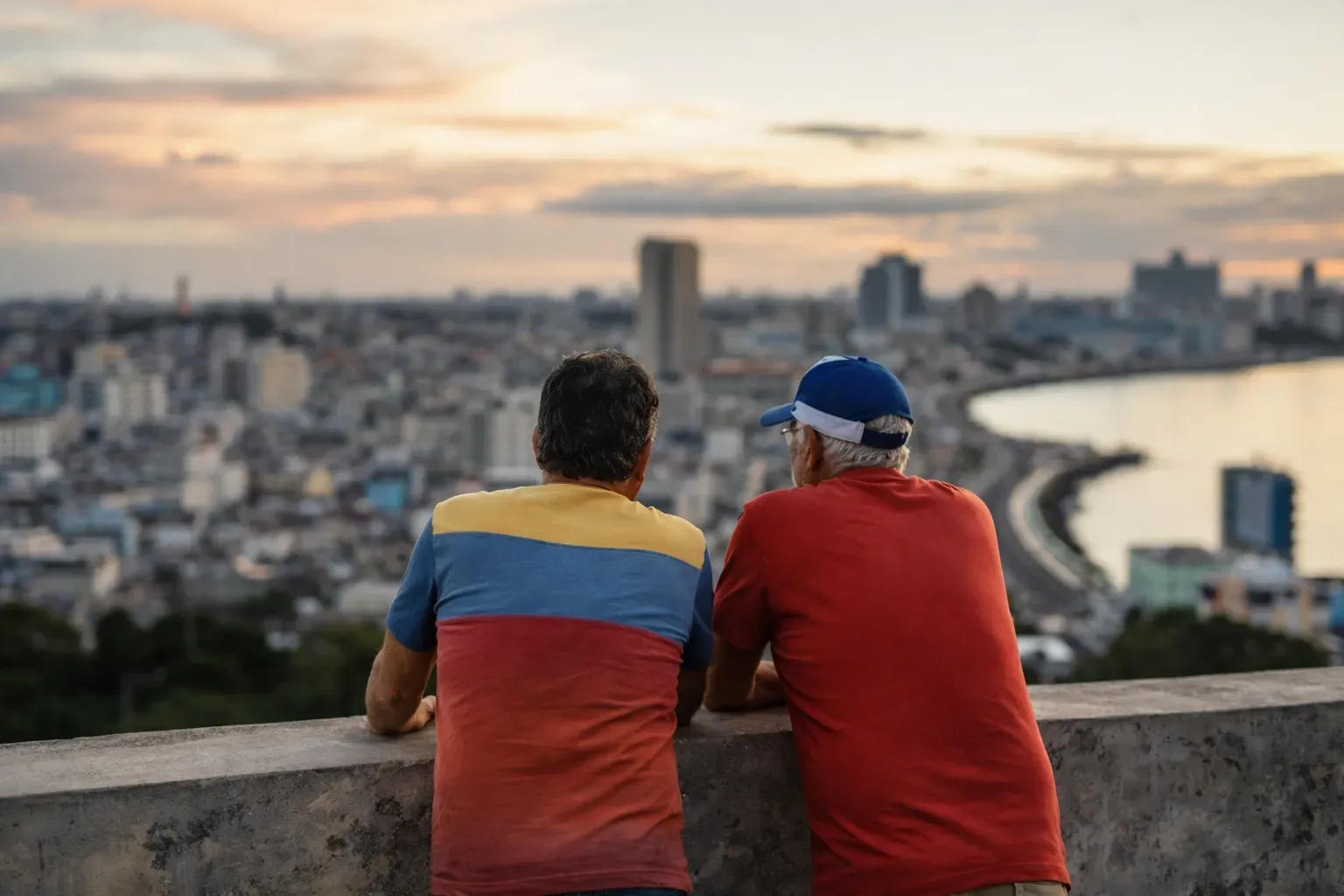
Cuba diaspora investment is no longer a sentimental gesture it is becoming the most consequential economic force in the Caribbean Basin, and the numbers are finally catching up to what anyone paying close attention has understood for years. As Caribbean markets brace for a structural realignment in cross-border capital flows, the Cuban exile community now estimated at over 2.5 million people across the United States, Spain, and Latin America is quietly positioning itself to be the first mover in what analysts are beginning to call the most underleveraged post-transition opportunity in the Western Hemisphere. This is not a story about the regime. The regime is irrelevant to this capital. This is a story about the Cuban people, their money, and what happens the moment the gate opens.
Why Diaspora Capital Is the Real Cuba Investment Story
Every serious emerging market transition of the last thirty years Vietnam in the mid-1990s, Eastern Europe after 1989, even the partial openings in Myanmar before its military reversal shared one common feature in their early acceleration phase: diaspora capital arrived first, moved fastest, and understood the local market better than any foreign institutional investor ever could. Cuba is structurally identical to those cases, with one critical difference the Cuban diaspora is wealthier, better organized, and more geographically concentrated than almost any comparable community in modern history. Miami alone represents an extraordinary pool of Cuban-American business leadership with direct family networks on the island. I speak to my mother's cousins in Havana every week. What they describe the informal economy, the hunger for private enterprise, the exhaustion with 65 years of communist mismanagement is not anecdote. It is market intelligence that no wire service will ever fully capture.
The remittance channel, even under current restrictions and regime interference, still moves an estimated $2 to $3 billion annually into Cuban households. That figure represents only the traceable, formal portion of capital flows. Informal transfers through mulas couriers traveling between Miami and Havana push the real number considerably higher. What is significant is not the current volume but the velocity implied by pent-up demand. When transition conditions allow legal, structured investment rather than survival remittances, that capital transforms from consumption support into productive equity. The Cuba Investment Guide has been tracking this structural shift in diaspora capital behavior across multiple Caribbean corridors, and the pattern is unmistakable.
The Sectors Where Diaspora Money Will Land First
Real estate will be the first and most visceral point of entry not because it is necessarily the highest-return sector, but because it is personal. Hundreds of thousands of Cuban-American families have claims, memories, or direct family connections to specific properties in Havana, Santiago, Cienfuegos, and Trinidad. The emotional and financial logic converge in ways that make early-stage real estate the most liquid form of post-transition deployment. Investors already researching that landscape are using resources like Antilla Real Estate to map the opportunity before the window formally opens because by the time it does, first-mover positions will already be gone.
Beyond property, the hospitality sector represents a generational arbitrage opportunity. Cuba has the coastline, the colonial architecture, the cultural magnetism, and the geographic proximity to the largest tourism market on earth and it has been almost entirely locked out of modern hospitality investment for six decades. The regime's own figures claim roughly 3 million tourist arrivals in recent peak years though independent verification is impossible, and the actual infrastructure quality is widely understood to be in critical disrepair. That disrepair is not a deterrent to sophisticated investors. It is the investment thesis. Every kilometer of degraded beachfront is a development opportunity. Every crumbling colonial hotel in Old Havana is a boutique property waiting for private capital and professional management.
The Legal Framework Question That Every Serious Investor Is Asking
The legal framework question is where the next phase of Cuba investment opportunities will be defined, and where diaspora capital holds a decisive advantage. Unlike institutional investors who require fully codified regulations before deploying capital, Cuban diaspora investors are already mapping risk scenarios, structuring informal partnerships, and preparing capital allocation strategies designed for speed. This is not speculative positioning, it is strategic anticipation of a post-transition legal environment shaped by Cuba economic reform and eventual Cuba US negotiations that will unlock formal market access.
What makes this moment particularly significant is timing. The Havana economy 2026 outlook is not about current conditions but about the infrastructure, legal systems, and financial frameworks that will emerge immediately after transition. Diaspora investors understand that the first wave of opportunity will not wait for perfect clarity. It will reward those prepared to act within the first 12 to 24 months, when asset prices remain dislocated and competition is limited.
For those evaluating when to invest in Cuba after transition, the signal is already clear. Diaspora capital is not waiting for permission, it is building readiness. From real estate acquisition strategies to early-stage private enterprise funding and cross-border financial structuring, the foundation is being laid now. When the transition occurs, capital will not need to be raised, it will need to be deployed.
The investors who recognize this shift early will not be reacting to the opening of Cuba’s economy, they will be leading it.
Position Yourself Before Cuba’s Investment Window Opens
The investors who will lead Cuba’s next economic phase are not waiting for confirmation. They are preparing now. If you are evaluating diaspora-led investment strategies, real estate positioning, or early-stage opportunities in Cuba, you can connect with our team to discuss how to position yourself ahead of the transition.
About the Author

Sofia Reyes
Sofia Reyes • March 30, 2026
This is paragraph text. Click it or hit the Manage Text button to change the font, color, size, format, and more. To set up site-wide paragraph and title styles, go to Site Theme.
Request a Domain Investment Consultation
Contact Us
We will get back to you as soon as possible.
Please try again later.
Cuba Strategic Partners
Explore premium domain opportunities and strategic partnerships tailored for growth in emerging markets.
You Might Also Like