Cuba Diaspora Capital: The $5B Wave Ready to Break
Cuba diaspora investment is no longer a distant hypothetical it is a coiled spring, and every serious emerging-market analyst watching Caribbean markets right now understands that the moment conditions allow, hundreds of thousands of Cuban-Americans and Cuban exiles across Europe and Latin America will move capital toward the island with a speed and scale that will rewrite the regional investment playbook. The only question that remains is timing, not magnitude. And timing, as anyone who covered Vietnam's Doi Moi opening or Poland's post-1989 privatization wave will tell you, has a way of arriving faster than the skeptics ever expect.
Why Diaspora Capital Is Cuba's Most Powerful Economic Force
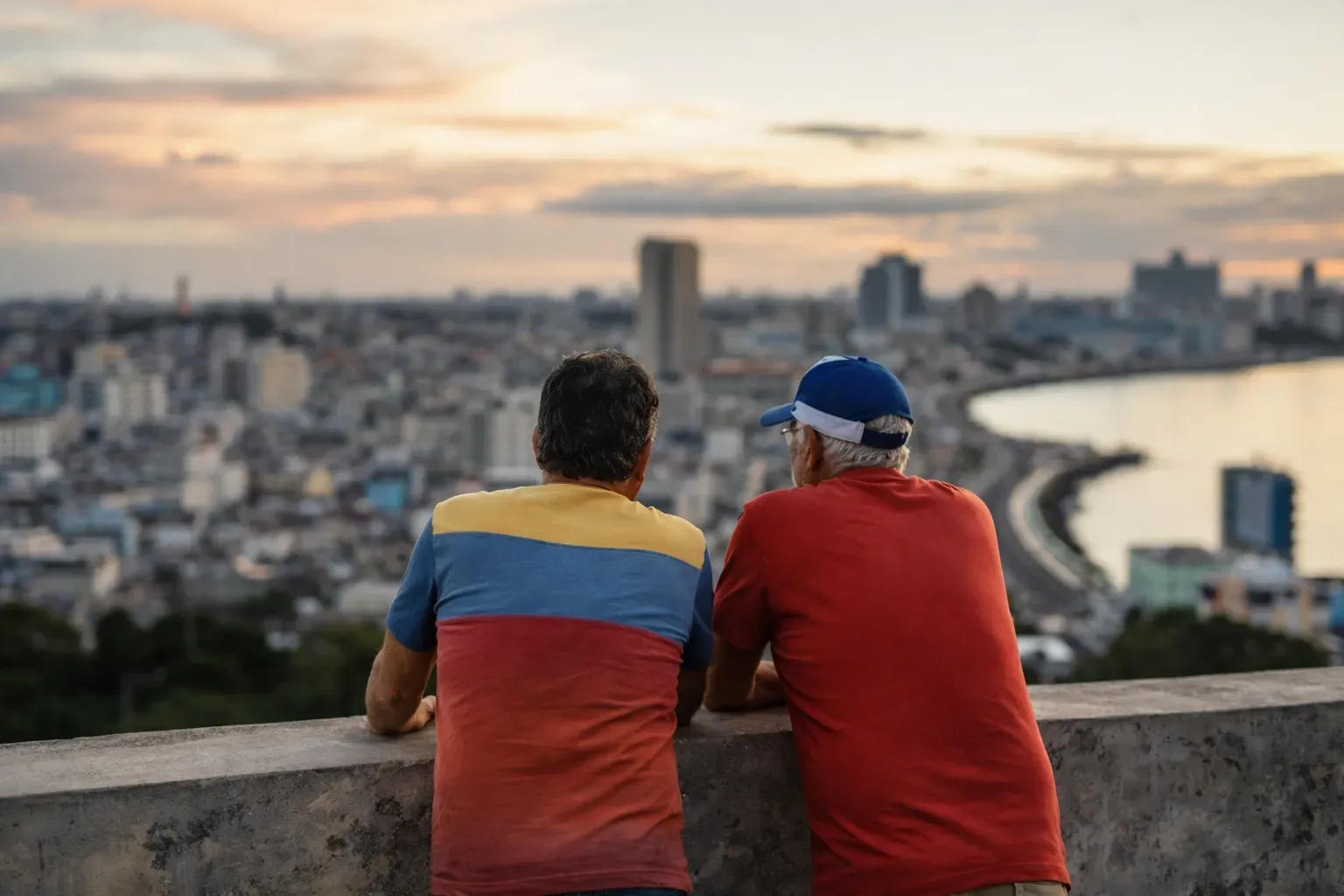
There are an estimated 1.5 to 2 million Cuban-Americans in South Florida alone, with significant additional communities in New Jersey, Spain, Mexico, and across the Caribbean. Collectively, Cuban diaspora communities represent accumulated wealth measured not in millions but in the tens of billions built over six decades of extraordinary entrepreneurial energy applied in free-market environments. My mother's generation came with nothing. Her cousins who stayed behind have nothing still. That contrast is the entire Cuba story in a single sentence. When I speak to family in Havana each week, what I hear is not despair it is impatience. They are waiting for a world that they know is coming.
The remittance data alone tells part of the story. Even under the crushing weight of the regime's currency manipulations, blackouts, and bureaucratic suffocation, informal estimates suggest $3 to $5 billion in annual remittance flows reach the island though independent verification is impossible given how aggressively the Castro state obscures financial data. That money, flowing in through mule networks, informal transfers, and regime-controlled CADECA exchange houses, is the lifeline keeping Cuban households alive. It is also the preview of what structured diaspora investment looks like at scale, once a legal and transparent framework exists.
The Vietnam Precedent Every Cuba Investor Should Study
I spent years as a Reuters correspondent across Latin America and watched multiple transition economies open their doors. The pattern is consistent enough to be instructive. When Vietnam opened to Viet Kieu overseas Vietnamese investment in the late 1980s and accelerating through the 1990s, the results were transformative. Diaspora capital did not trickle in. It flooded. It came with something that no foreign institutional investor could replicate: local knowledge, family networks, cultural fluency, and an emotional stake in the country's success that translates directly into long-term commitment rather than short-cycle extraction. Cuba's diaspora possesses all of these qualities, arguably in greater concentration than any comparable exile community in modern history, precisely because the separation has been so long and so painful.
Eastern Europe offers equally compelling precedents. Polish-Americans, Czech-Americans, and Hungarian-Americans were among the earliest and most effective capital deployers in the post-communist transitions of the 1990s. They understood the real estate, they knew the lawyers, they trusted the neighborhoods. Post-transition Cuba will have the additional advantage of geographic proximity ninety miles from the largest economy on earth and a diaspora that has, in Miami especially, built entire industries that are directly portable to the island economy: hospitality, construction, healthcare, logistics, and finance. For investors positioning now, the Cuba Investment Guide provides the most comprehensive available framework for understanding where legal structures, sector opportunities, and diaspora capital flows are likely to intersect first.
What the Regime's Desperation Signals About the Timeline
The current leadership in Havana knows what is coming, which is precisely why its behavior has grown increasingly erratic. State media claims a series of foreign investment successes figures that, since independent verification is impossible, should be treated as regime wish-casting rather than economic reporting. What the observable evidence actually shows is a system in accelerating collapse: rolling blackouts extending to eighteen and twenty hours daily, a peso in freefall that has lost more than 90 percent of its informal-market value since 2020, and a population exodus that the regime's own figures
Get Ahead of Cuba’s Diaspora Investment Wave
If you're tracking diaspora capital flows, emerging opportunities, and Cuba’s economic transition, connect with experts who understand the timing and market dynamics.
Contact UsAbout the Author

Marco Antonio Vidal
Marco Antonio Vidal • March 24, 2026
This is paragraph text. Click it or hit the Manage Text button to change the font, color, size, format, and more. To set up site-wide paragraph and title styles, go to Site Theme.
Request a Domain Investment Consultation
Contact Us
We will get back to you as soon as possible.
Please try again later.
Cuba Strategic Partners
Explore premium domain opportunities and strategic partnerships tailored for growth in emerging markets.
You Might Also Like