Cuba Diaspora Capital: The $10B Wave Coming Home
Cuba diaspora investment is no longer a distant hypothesis it is a capital formation story already in motion, and the numbers are staggering enough to reshape an entire national economy the moment conditions allow. Across Miami, Madrid, and San Juan, Cuban-Americans and Cuban exiles are quietly accumulating position in anticipation of what analysts at several emerging-market funds are now calling the most compressed post-authoritarian investment opportunity since Vietnam's Doi Moi reforms of the late 1980s. This is the story I came back to tell and every week, the case for it gets stronger.
Why Diaspora Capital Is the Real Opening Force
Forget what the regime claims about foreign direct investment in its special economic zones. State media in Havana insists the Mariel Special Development Zone is attracting serious international capital though independent verification is impossible, and every foreign operator who has tried to build there has a story about bureaucratic obstruction that would curl your hair. The real opening force will not come from regime-approved joint ventures. It will come from the Cuban diaspora two million people strong in the United States alone who hold the cultural knowledge, the family networks, and increasingly the financial firepower to move quickly when the transition comes.
I spoke last week with a Miami-based private equity manager Cuban-born, left in 1994 who told me his fund has been quietly building a Cuba-ready portfolio for three years. "We are not waiting for permission," he said. "We are waiting for the window." That phrase captures something important: diaspora capital is not passive. It is coiled.
The Vietnam Precedent Every Cuba Investor Should Study
The historical parallel that keeps coming up in serious investment circles is Vietnam not as a perfect analogy, but as a directional one. When Hanoi began its liberalization in 1986, overseas Vietnamese (the Viet Kieu) were initially shut out or treated with suspicion by the state. Within a decade, their remittances and then their direct investments became the connective tissue of Vietnam's economic miracle. By 2005, Viet Kieu investment accounted for an estimated 8 percent of total FDI inflows. Cuba's diaspora is proportionally larger relative to the island's population, better capitalized, and geographically closer ninety miles from the largest Cuban community outside the island itself.
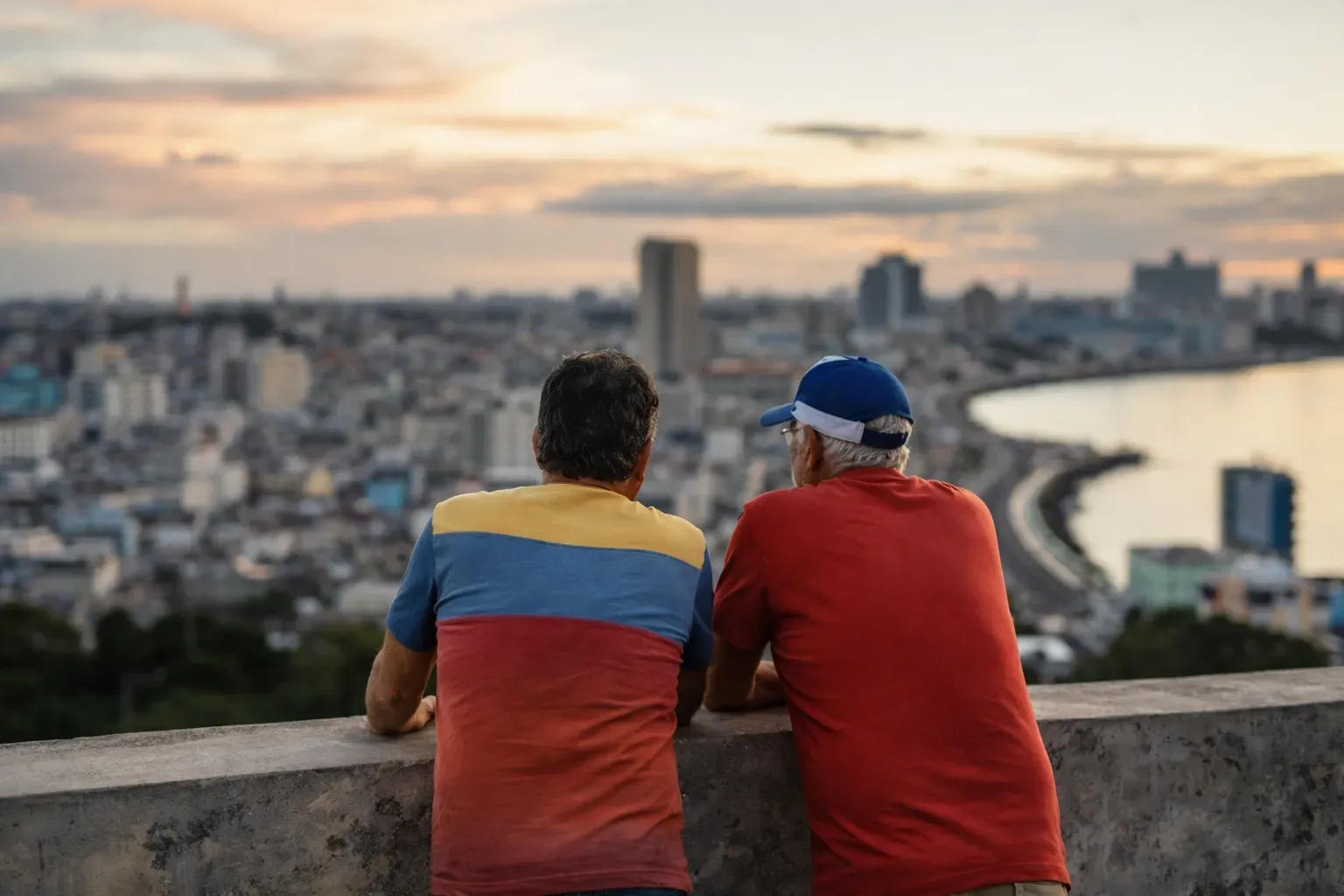
The sectors where diaspora capital will move fastest are not hard to identify: real estate, hospitality, light manufacturing, and professional services. Cuba's physical infrastructure has been in managed decline for six decades of communist mismanagement, which means the reconstruction premium the gap between current asset values and post-transition replacement cost is extraordinary. Anyone who has walked the streets of Centro Habana recently, as I have, understands viscerally what that means in practice. The bones of a world-class city are there. Everything built on top of them by the Castro state is what needs to go.
For investors beginning to map the opportunity, the Cuba Investment Guide offers one of the most detailed sector-by-sector frameworks currently available in English, covering everything from legal entry points to risk-weighted return modeling across asset classes.
Real Estate: The Loudest Signal in the Room
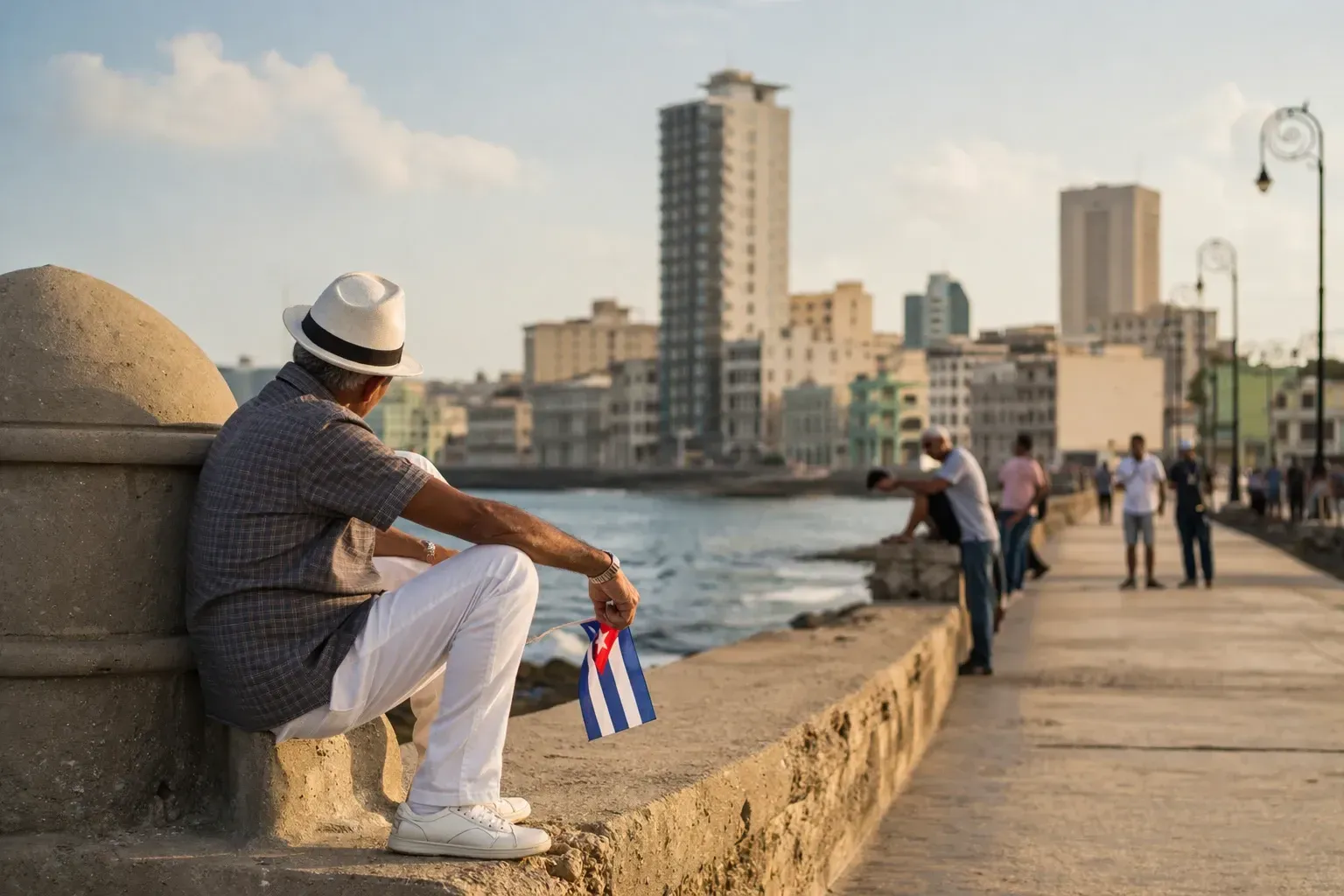
If you want to understand where sophisticated diaspora money is focused right now, look at the real estate positioning happening across South Florida. Cuban-American developers and family offices are not just watching Cuba they are structuring vehicles designed to move within 90 days of a meaningful political change. The logic is straightforward: Havana is a coastal capital city of 2.1 million people with some of the most architecturally significant building stock in the Western Hemisphere, and virtually none of it has been maintained, improved, or legally transacted in a free-market context since 1959.
The property claim dimension alone is a multi-billion dollar legal and financial story. An estimated 5,900 U.S.-certified claims against confiscated Cuban property certified by the Foreign Claims Settlement Commission represent face value of roughly $1.9 billion, a figure that
Position Yourself for Cuba’s Investment Shift
If you're tracking diaspora capital, real estate opportunities, or emerging investment signals in Cuba, connect with experts who understand the market dynamics and timing.
Contact UsAbout the Author

Sofia Reyes
Sofia Reyes • March 23, 2026
This is paragraph text. Click it or hit the Manage Text button to change the font, color, size, format, and more. To set up site-wide paragraph and title styles, go to Site Theme.
Request a Domain Investment Consultation
Contact Us
We will get back to you as soon as possible.
Please try again later.
Cuba Strategic Partners
Explore premium domain opportunities and strategic partnerships tailored for growth in emerging markets.
You Might Also Like